Best Mens Toupee Styles for a Realistic Hairline and Natural Finish
best Mens toupee options are those that complement your natural hairline, face shape, hair color, and preferred hairstyle without looking overly dense or artificial. A realistic finish depends on several factors, including the base material, hair direction, front contour, density, and the way the system blends with your existing hair. Whether you prefer a short professional cut, a textured everyday style, or a swept-back look, choosing the right combination of features can help you achieve a balanced appearance. Understanding these details makes it easier to select a hair replacement system that suits your lifestyle and coverage needs.
What Makes a Toupee Look Natural?
A natural-looking toupee combines a realistic front hairline with suitable density, matching hair color, and a base material appropriate for your preferred style.
Keep these essential points in mind:
-
Natural hairline: Choose a front contour that complements your facial features and existing hair.
-
Appropriate density: Avoid excessive fullness if your natural hair is finer or thinner.
-
Correct hair direction: Select a style that supports your preferred parting or brushing direction.
-
Suitable base material: Thin skin, French lace, Swiss lace, and monofilament each offer different benefits.
-
Accurate color matching: Consider natural hair color, gray percentage, and texture.
-
Professional blending: A skilled stylist can trim and shape the system to complement your existing hair.
The best choice is not necessarily the most expensive or densest system. It is the one that fits your head, looks proportionate, and works with your daily styling routine.
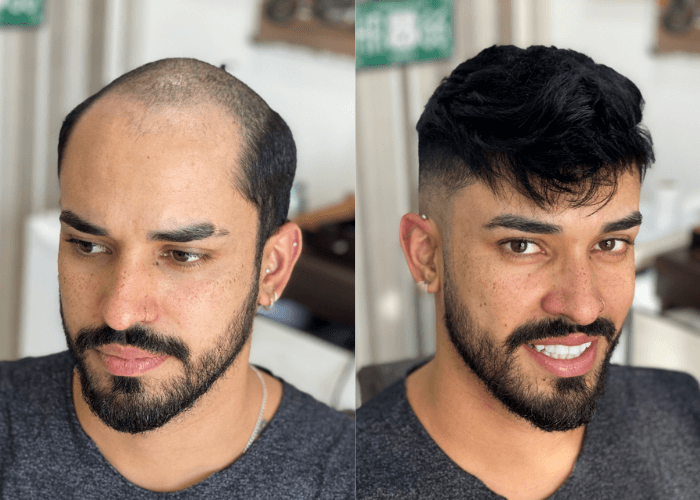
Which Toupee Hairstyles Create the Most Realistic Appearance?
Different hairstyles create different visual effects. Before selecting a hair system, think about how you normally wear your hair and whether you want to maintain your existing look or try something new.
1. Short and Textured Hairstyle
A short textured style can create a relaxed, modern appearance. Slight variation in hair direction helps the style look less uniform, while a suitable density can make the transition between the system and your natural hair less noticeable.
This option may suit men who want a practical haircut that requires relatively simple daily styling. Ask your stylist to blend the sides and back carefully and avoid creating an abrupt difference between the replacement hair and your existing hair.
2. Classic Side-Part Hairstyle
A side part offers a neat, professional appearance. It works best when the system's ventilation direction supports the intended parting and the hair density is appropriate for the style.
The front hairline should look proportionate rather than perfectly straight or unnaturally low. If your natural hair has a slight recession, a compatible contour may create a more balanced result.
3. Brush-Back Hairstyle
A brushed-back style moves the hair away from the forehead, making the front hairline particularly important. The base, hair direction, and front density should all support the desired finish.
Choose this style only if the system's construction and attachment method are appropriate for exposing the hairline. A stylist can help determine how much hair should be directed backward without creating excessive tension or an unnatural shape.
4. Freestyle Hairstyle
Freestyle ventilation allows greater flexibility in arranging the hair, depending on the construction of the system. You may be able to create a side part, sweep the hair forward, or change your styling direction.
This option is useful for men who prefer variety rather than maintaining one fixed hairstyle. However, freestyle does not mean every style will suit every system; hair length, density, and base construction still matter.
5. Longer, Layered Hairstyle
Longer styles can add movement and volume, particularly when the hair has a natural wave. Layers can help the replacement hair blend with existing hair and create a softer outline.
Longer systems may require additional detangling and styling care. Confirm the available hair length and texture before ordering, especially if you want a specific layered cut.
Hairpiece Warehouse provides several hair-direction options, including freestyle, brush-back, and different parting styles. Your choice should match your intended hairstyle and the product specifications.
How Do You Choose the Right Hairline for a Natural Finish?
The hairline is one of the most visible elements of a toupee. Even a well-matched color can look artificial if the front contour, density, or hair direction is unsuitable.
Match the Hairline to Your Face
Your hairline should complement your forehead, temples, and facial proportions. A very low hairline can look unnatural if it does not suit your existing features.
Consider your previous hairstyle and natural hairline before selecting a new design. You do not necessarily need to recreate the hairline you had years ago; a balanced shape that suits your current appearance may look more convincing.
Avoid Excessive Front Density
Hair near the front should generally blend with the density behind it. If the front looks too thick compared with the rest of the system, the hairline may appear artificial.
The appropriate density depends on your age, natural hair, hairstyle, and personal preference. Ask a knowledgeable stylist for guidance if you are uncertain about the right level.
Understand Hairline Base Materials
Lace bases are often chosen for their fine mesh construction and potential to create a natural-looking front. Thin-skin bases can provide a scalp-like appearance, particularly with suitable hair attachment techniques.
Some systems combine a lace front with a different base material around the sides and back. These hybrid constructions can balance hairline appearance with attachment and cleanup preferences.
Which Base Material Should You Choose for the Best Mens Toupee?
The base material affects how the system looks, feels, attaches, and responds to maintenance. The right choice depends on your priorities rather than a universal ranking.
Thin Skin for a Scalp-Like Appearance
Thin-skin systems use a polyurethane base. Depending on the construction, V-looped hair can create the impression that hair grows directly from the scalp.
This design may suit men who prioritize a scalp-like finish and straightforward cleanup. However, thin skin generally offers less airflow than lace, so consider your climate, activity level, and comfort preferences.
French Lace for Breathability
French lace uses a mesh base that allows airflow. It can be a useful option for men who want a lightweight system with a natural-looking hairline.
Some designs combine a French lace top with a polyurethane perimeter. This arrangement can provide a breathable central area and a defined attachment border.
Swiss Lace for a Fine Front Hairline
Swiss lace is a finer mesh option often selected for its lightweight feel and delicate appearance. It can be appropriate for wearers who prioritize a subtle hairline.
Because fine lace can be more delicate, it requires careful handling during attachment, removal, and cleaning. Consider your maintenance experience before choosing this material.
Monofilament for Durability
Monofilament systems use a mesh-like base designed to balance airflow and durability. Some designs include polyurethane around the perimeter to support attachment and simplify certain cleanup tasks.
This may suit wearers who prefer a sturdy construction and are comfortable with a base that may be more visible than very fine lace in some situations.
Explore hair systems for men at Hairpiece Warehouse to review available stock options and their specifications.
How Important Are Hair Color, Texture, and Density?
The most realistic result usually comes from matching several details together rather than focusing on one feature.
Hair color: Compare your natural hair with the replacement hair under natural and indoor lighting. Check for differences in warmth, darkness, and gray percentage. A small mismatch can become more noticeable when the system is worn beside your own hair.
Hair texture: Straight hair, loose waves, and curls reflect light differently and create different shapes. Select a texture that resembles your natural hair or suits the cut you plan to maintain.
Hair density: Density affects the apparent fullness of the hairstyle. A lighter density can look more appropriate for naturally fine hair, while a fuller style may be suitable for particular cuts. The goal is to achieve a consistent appearance.
Hair length: The system should provide enough length for your intended hairstyle and any necessary trimming. If you plan to wear a longer style, confirm the available length before ordering.
Gray percentage: If your natural hair contains gray, check whether the system offers a suitable gray mix. Matching this detail can help the replacement hair blend with your existing hair.
Should You Buy Hair Systems for Men Online or Choose a Custom Toupee?
When you buy hair systems for men online, product details are essential. Review the base construction, size, color, density, hair length, wave pattern, and available styling options before making a decision.
A stock system may be suitable if its specifications meet your needs. It can be a convenient option when you want an existing unit with a compatible size and hairstyle.
A custom system may be more appropriate if you need specific dimensions, a particular hairline shape, specialized density, a unique wave pattern, or a closer match to a system you already wear.
Before ordering, measure your coverage area and confirm whether the system can be trimmed. Some bases can be resized more freely than others, depending on their construction and perimeter design.
Hairpiece Warehouse offers stock and custom hair replacement options. If you need a more individualized fit or styling specification, review the available choices and seek guidance before placing an order.
How Can You Maintain a Natural-Looking Toupee?
A well-chosen system still needs proper care. Maintenance helps preserve the hair's appearance, protect the base, and reduce tangling or unnecessary wear.
Clean According to the Base Material
Follow the cleaning instructions for your particular system. Lace, thin skin, and monofilament may require different handling methods. Avoid harsh scrubbing, excessive pulling, or products that are not suitable for the base.
Detangle Gently
Use an appropriate comb or brush and work gradually from the ends upward. Avoid forceful brushing, particularly when the hair is wet, because excessive tension can damage the hair or base.
Use Heat Carefully
If the system is suitable for heat styling, use moderate temperatures and appropriate protection. Avoid assuming that every human-hair system can tolerate the same level of heat.
Maintain the Attachment Properly
Follow the recommended attachment and removal process for your system. Do not pull the unit off forcefully, and use products suitable for the base and attachment method.
Schedule Trimming and Blending
As your natural hair grows, the transition between it and the system may change. Periodic trimming can help maintain a consistent style and prevent the overall appearance from becoming uneven.
Frequently Asked Questions
1. What Is the Best Mens Toupee for a Realistic Hairline?
The best option depends on your hairline preference, base material, density, and experience with hair systems. Fine lace can support a delicate-looking front, while suitable thin-skin construction can create a scalp-like appearance.
2. Which Hairstyle Looks Most Natural With a Toupee?
Short textured styles, side parts, and carefully blended classic cuts can all look natural when the color, density, and hair direction are appropriate. Choose a style that suits your facial features and existing hair.
3. Are Mens Hair Systems Suitable for Everyday Wear?
Many systems are designed for regular wear, but suitability depends on the base, attachment method, scalp comfort, and maintenance routine. Follow the product instructions and consult a professional if you experience irritation.
4. Can I Change My Hairstyle After Buying a Toupee?
Some systems allow several styling options, particularly those with freestyle ventilation. However, the hair direction, length, density, and construction may limit what is practical. Confirm these details before purchasing.
5. How Do I Find Hair Systems for Men Near Me?
Search for a hair replacement specialist or salon that offers fitting, color matching, trimming, and maintenance. Ask about experience with your preferred base material and whether they can help you achieve the hairstyle you want.
Final Thoughts
The best Mens toupee for a realistic hairline is one that suits your face, blends with your natural hair, and meets your comfort and maintenance needs. Pay attention to front contour, hair density, color, texture, and base construction before choosing a system.
Whether you prefer a short textured cut, a classic side part, a brushed-back style, or a longer hairstyle, careful selection and professional blending can make a meaningful difference. Review product specifications, measure your coverage area, and choose a maintenance routine you can follow consistently. These steps will help you find a hair replacement option that supports a natural-looking finish and fits your everyday lifestyle.
Also Read: Affordable Mens Hair Systems for Beginners